Wizeu
Society & Cultures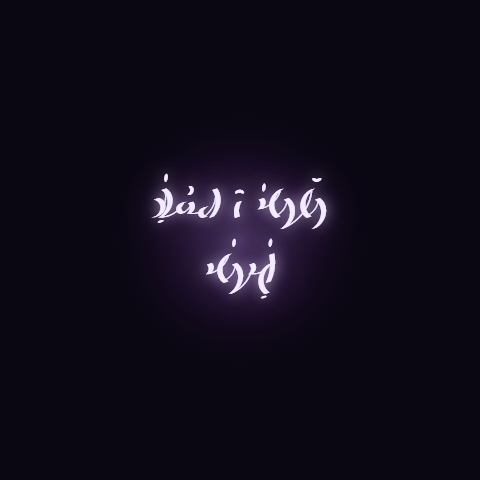
The Village
The wizeu people
Eyes and hair of many different colours, light and luminous complexion, sensitive to the sun, and smooth and harmonious features.
The Wizeu are traditionally associated with the Pranadynamics: it is the ethnic group with the most presence among the Magisters, and the one that has shaped—literally—how magic is drawn. Their clear and luminous skin, sensitive to the sun, pushes them towards crepuscular habits and to covered or buried spaces; it is not uncommon to find their study circles at low light hours.
The dominant archetype, the Unicorn, sets its tone: creativity over brute force, preference for solving a problem in a way that no one has tried before. Minority archetypes include Kitsune, Tiger and Deer — cunning, occasional drive and care. All three are well reflected throughout the story.
Relation to Magic
The wizeu did not invent the prana —it existed before any people had language—, but they are its great scholars: they founded the profession of Magister and the study of Pranadynamics, they have catalogued everything and keep an archive. They are by far those who write most magic, which is why anyone learning magic is interested in wizeu. A Magister runifies —writes the sentences on the composition ring—and channels —lights them with the key—; when the ring closes and everything shines, that is the canon.
It is no coincidence that its writing and the element's internal structure share the same geometric piece —the vesica arc—: the seed of life and the trion-re that a Magister studies on the element's sphere are made in the same way as the letters with which he invokes it.
angei mhatun i halle hlahdha mhoshan gal mhuih"Void: Venus and Earth, thirteen turns by eight" - fragment of the composition ring of the Void
The Language
The wizeu is a spoken language of soft sounds, and it is written with a script designed from scratch for runification: each letter is there so that it can be traced with a single gesture, not because it needs to be read comfortably in a book. It has twenty-one letters, all made from the vesica arc; vowels are not separate letters but a mark that rides on top of a base.
[h]
[s]
[n]
[t]
[l]
[d]
[ɾ ʁ]
[m]
[v]
[p]
[g]
[f]
[k s]
[b]
[w]
[a]
[e]
[i]
[o]
[u]
[y][i]
[m]
[ʃ][ʒ]
[t]
[d]
[l]
[ɲ]
● How it sounded in the magic era
Behind some consonants there is an h that isn't a separate sound but the mark of lenition: the closure that doesn't get to complete and lets air pass through. That writing separates what cuts the current from what leaves it running isn't a whim — it's the same distinction that decides if the prana crosses a rune or stops there. And it is an achievement of today: in the magical era, people still didn't write. Now they master it so much that it gets fixed on the rune and, when speaking, they take it for granted: it's the letter that doesn't sound but can be heard. That's why only sh and nh make it really audible, and whoever runifies no longer depends on voice but on stroke.
The Numbers
The wizeu does not have loose figures: one single sign —a shaft with a stroke in each of four quadrants— writes any number from 1 to the entire 9999. The upper right quadrant is for units, the top left for tens, the lower right for hundreds, and the bottom left for thousands. Zero is the shaft alone, without any stroke.
How to pronounce it?Letter by letter and what changes when speaking
The h doesn't close anything, it is air that comes out by itself. The w rounds the lips without joining them. The y is said with the tongue where it would go for the i and the lips where they would go for the u, and in front of another vowel [ɥ] slips. The u also slips in front of a vowel [w], and often moves forward to sound like the y. The au is called o, and the ei, e. The g always sounds the same and never softens; neither does c, except in front of e and i, where it whistles like an s. The s never becomes sonorous between vowels. The r is a short touch of the tongue, but in front of a consonant or at the end of a word it usually goes to the back, into the throat [ʁ]. The l is said with the tongue high and clear; the v, with the teeth on top of the lip and never with both lips. Of the six lenitions, only two change their sound: sh diverts the air over the tongue [ʃ], and nh raises the tongue to the palate [ɲ]. In mh, th, dh and lh, the h is written but it doesn't sound. And vowels are said whole, even those that don't have an accent; only the final e of a long word, when it falls loose, can be extinguished in one breath.
How to write itThe two registers, the stroke and the ligature
Each consonant is one, two or three arcs of the vesica hanging from an invisible axis, or placed next to it: h and s have only one; c has three; and all others, two. Some pairs are recognized by their drawing: c is g with a comma, the extra air that carries the voiceless sound, and f is like v, but with the left vesica enlarged. b and p, which cut off the air completely, have both vesicas back to back. The vowels do not carry them: they are a mark riding on top of a base, because a vowel does not support anything, it only tints the sound that comes in. And lenition falls there as its own mark, under the letter, not like another letter.
The two records
It has two registers, made with the same hand. The lapidary leaves each letter alone, without any ligature: it is the one that is engraved in stone or metal, where the tool cannot follow a continuous line. The ligature chains the letters in a single gesture, and it is the one that is written on the composition ring.
the same sentence, pithy above and tied below — "the prana passes through the circle of the magician"
How to draw
Each stroke is made from top to bottom, and those of a word follow one another from left to right in the order they are made: not letter by letter, but stroke by stroke. A letter with two vesicles makes two, and if one rests on top of the other, first the upper one.
The thickness is not made by the hand but by the pen: letters are written with a wide-bladed pen that does not change its inclination and the stroke becomes thicker where it crosses and thinner where it runs along the edge. For this reason, each vesica has one end that slides thinly and another full. The vowel marks are made with the same pen and less pressure; that of a is a drop, which presses and goes out as it descends.
The ligature
Each stroke ends at the bottom and the ligature starts there and rises to the top where the next stroke begins. While it rises, the pen turns and loosens: it starts with a body and arrives almost invisible, where the next letter already takes center stage.
Its shape follows a rule: it always makes the opposite curvature of the stroke from which it emerges, as if to close the other half of the vesica. After a stroke that bends to the left, the ligature is a saucer; after one that bends to the right, an arc. The same rule applies between the two vesicas in the same letter: if they already touch each other, like in f, no need for it: the pen rises and starts over.
GrammarThe seven particles, contraction and plural
The wizeu does not decline with endings but with single-syllable particles before the name. There are seven of them, and they all fit into two or three signs: it is no coincidence, because a language that has to fit every sentence inside the turn of a composition ring cannot afford long words for things that always appear there.
| Case | Shape | What does it say? |
|---|---|---|
| Called | as seas · se [as] · [se] | Who does and who receives. The form that goes to the judgments. |
| Origin | rara [ra] | From whom, where does it come from? |
| Destination | ee [e] | Where is he going? |
| Channel | galgal [gal] | Where does it go? It's the case of the canon. |
| Company | evpaevpa [ˈev.pa] | What is it made of? |
| Site | atat [at] | Where is it? |
| Deprivation | natnanatna [ˈnat.na] | Without what? |
The accent always falls on the first syllable and particles never lose their vowel. Therefore, even though they are unstressed, they sound complete: the case is never lost sight of, not even when speaking quickly.
The contraction
When a particle collides with the article as, it melts and leaves it reduced to an end s. It is not an exception but the norm: it happens with all three, always the same, and that's what keeps short sentences.
| ra asra + as | rasras [ras] | Origin |
| e ase + as | eses [es] | Destination |
| gal asgal + as | gasgas [gas] | Channel |
The plural
An n at the end applies to everything - names, articles and contracted particles - without exception: etass makes etassn, as makes asn, ras makes rasn.
The feminine adds something of its own: it changes the vowel in the subject. golhe (door) becomes golhan; halle (ground) becomes hallan. It is the only alternation that has the language and it is regular.
All at once
as glete genne gas daldsa ras vem · [as ˈgle.te ˈgen.ne gas ˈdald.sa ras vem]
«the prana passes through the circle of the mage»
as is called; gas is the channel (by + as); ras is the origin (of + as). Three particles and the sentence already says who, by where and from whom.
Big numbersHow to chain signs starting at 10,000
For larger numbers, signs are chained from left to right just like normal numbers but ten thousand at a time instead of ten by ten:
173 is a single sign. 9,999 is the maximum that fits in one sign. From 10,000 onwards two are needed —the first says how many tens of thousands, the second the remainder— and it would be the same for any figure, however large: 100,000,000 is three.
The magical eraThe old form of the language alongside the current one
Today's wizeu comes from an older form, that of the magical era. It is immediately recognized as the same language because the vowels are almost always the same and fall in the same place; what has changed are the consonants and how they are written.
as glete genne gas daldsa ras vem · al ksere kenne kal masmla tal geh
the same sentence, above in the wizeu of today and below in that of the magic era — "the prana passes through the circle of the magician"
The transcription was different: the symbol that we write sh today was written j, c sometimes was k, and w did not exist. The article was al instead of as, so contractions ended in l: what is nowadays ras then was tal, and gas was kal. Lenition was not marked, as it is today, with a h after the consonant: this way of writing it belongs to the current script. And when a small word lost its vowel before another one, it stuck on without leaving any space: where we now write s eimue, then was written leihue.
| Case | Today | It was magical |
|---|---|---|
| Called | as seas · se | al leal · le |
| Origin | rara | tata |
| Destination | ee | ee |
| Channel | galgal | kaskas |
| Company | evpaevpa | egbegb |
| Site | atat | arar |
| Deprivation | natnanatna | narnanarna |
The grammar was already the same: particles merged with article —tal, el, kal—, plural added an n to everything, and feminine changed vowel as nowadays: kosde (door) became kosdan.
As for sound, it was almost like today. What distinguished it most was the j, the symbol of sh: it was called fricated, with the tongue raised towards the palate without touching it and the air passing out in a voice [ʒ]. Today the same symbol is called voiceless, [ʃ].
Festivals and Customs
The Return of Prana
Remember the day that magic returned, after the year when the invasion of emptiness turned it off everywhere. At sunset all lights go out and silence falls, in memory of the year without prana. When it's completely dark, someone who knows how to light the first rune in each village, and behind him everyone lights their own: most have never channeled, but a piece of amber with prana does the job. The night ends full of lights that are not fire.
The Market of Shapes
It falls in the month of the Unicorn. For a wizeu, a well-made form is one that comes from a single gesture, like its letters, and therefore nothing finished is exposed on the market: each stall makes his piece before everyone —a vase on the lathe, a blown glass, a name written in ligature without lifting the pen—and it is bought still hot. Children write their first word in ligature there, and the family keeps it.
The Night Without Sunlight
The shortest night of summer is spent in wakefulness from sunset to sunrise with houses open to one another. It is the night for things that are meant to last: couples get married, deals are closed and apprentices are taken on, and every engagement is written down in a single linked sentence so that neither stroke nor word can be interrupted. When the sun rises those who have made an engagement look at each other.
The Night of Sabotage
On the sixth of Chameleon, the faithful of Esad —the Subduing God, Zadami for those of Nabiit, lord of the underworld and the undead— hold their great banquet, and the wizeu spend the night disrupting it. They boycott their provisions days beforehand, enter the room to make joking searches with all the authority of who is in charge, salt their wine, turn off the lights halfway through a toast and hide runes of amber under the chairs that make noise. No one comes out to defend the devotees from the enemy of the world, and they know it: they endure the night as best they can and try again next year.